
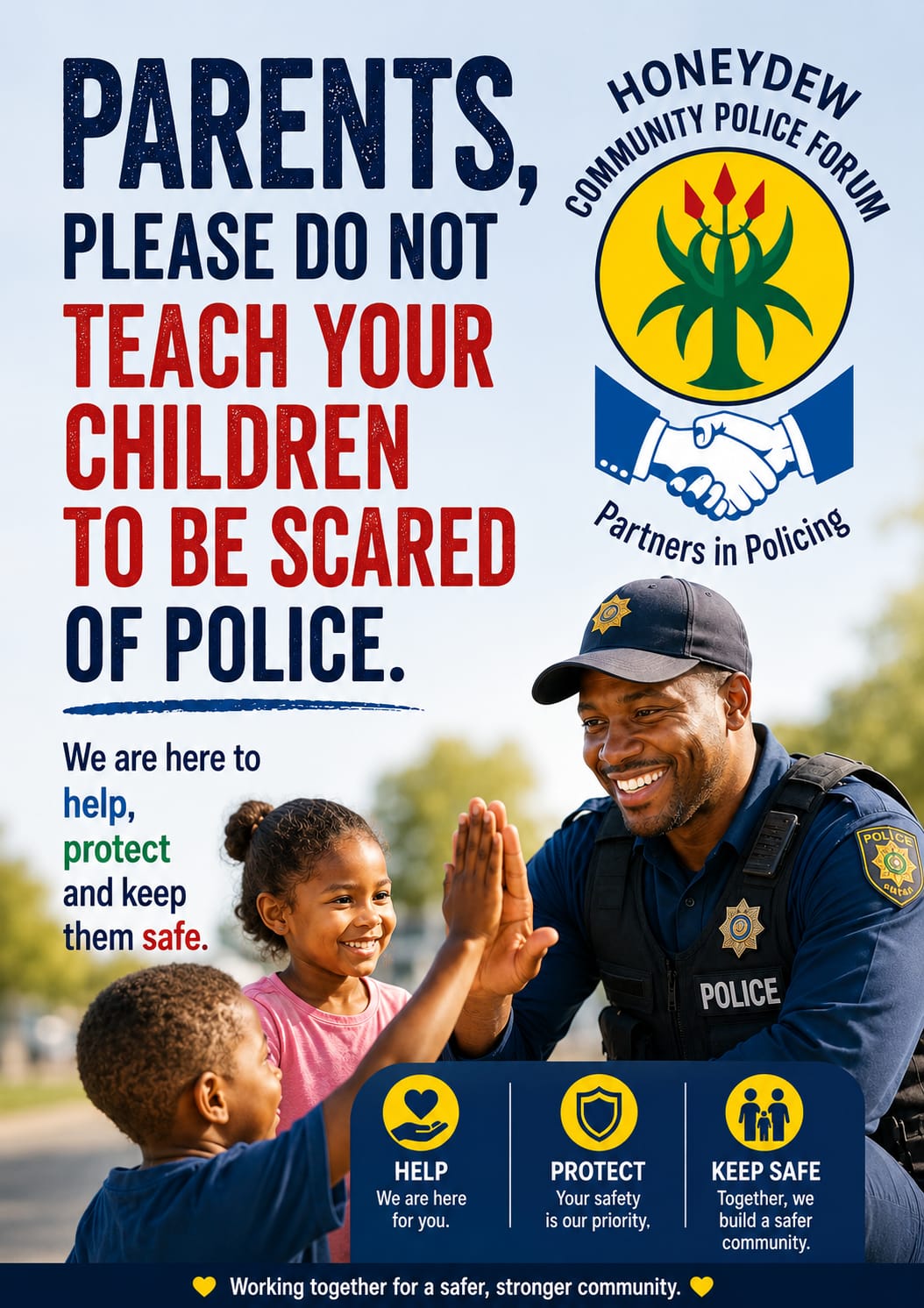
Why Children Should Trust the Police
Parents should never teach children to fear the police by using phrases like “If you don’t behave the police will come get you or saying ” our police in South Africa are a useless bunch” which could not be further from the truth. In fact our police service protects all South Africans very effectively with the resources provided to them. Police officers perform their duties to the highest possible standards and put their lives at risk on a daily basis, therefore we should be respectful to them when discussing their services in front of children. Parents may feel disillusioned with the police, however officers from the South African Police Service ( SAPS) are who will protect you are your family from violent crimes. This is why children should be taught that it is safe to approach a policeman or policewoman, should they require assistance in the event they feel threatened or feel in danger. Whether you like it or not it is far more dangerous for your children to ask a random stranger for help, than it is to ask a policeman or policewoman for help. Therefore, parents should instill trust in the police into their children, especially younger children who are at more risk of getting lost in a shopping center or wandering off in public. Should your child do this and they are taught to ask the police for help they are more likely to be safely reunited with their parents.
South Africa faces extremely high levels of violent crime, kidnapping, hijacking, house robbery and child trafficking. In these situations, the South African Police Service are often the first people called when families need urgent help. While no police service in the world is perfect and criticism of policing may sometimes be justified, it is important for parents to separate adult frustrations from what children need to learn for their own safety. Young children especially need to understand that a uniformed police officer is somebody they can approach if they need protection or assistance.
Parents should also remember that many SAPS members place themselves in dangerous situations daily to protect communities. Officers respond to armed robberies, domestic violence cases, vehicle accidents, missing child reports and violent crimes that most ordinary citizens would never want to face themselves. Many police officers are also parents and family people who genuinely care about keeping children safe. Teaching children to automatically distrust every police officer can place them at greater risk in emergencies.
Teaching children how to safely identify police officers is equally important. Children should know what a SAPS uniform looks like, what police vehicles look like and how to identify officers at shopping centres, schools, public events and roadblocks. Parents can explain that if they ever become separated from their family, they should immediately look for a police officer, security officer or another trusted authority figure rather than wandering around alone or accepting help from strangers.
Building positive relationships between communities and police starts at home. Children who grow up understanding the role of law enforcement are more likely to cooperate with police during emergencies and report dangerous situations when necessary. Even simple interactions such as greeting police officers politely or thanking officers for their service can help children view police in a more balanced and realistic way.
Parents do not need to pretend the police are perfect. Instead, they should teach children that police officers are there to help protect the public and should be approached when someone feels unsafe, threatened or lost. Creating fear of the police may seem insignificant in conversation, but in a real emergency it could influence whether a frightened child seeks life saving help or runs away from it.
Children should feel comfortable approaching the police when they are lost scared in danger or need assistance. Teaching fear from a young age can prevent children from asking for help when they need it most. Instead children should grow up understanding that police officers are there to protect families support communities and respond during emergencies